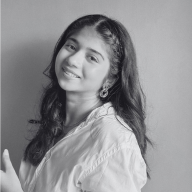
Sakina Saifuddin
Healthcare ML Researcher. Data Science And AI Graduate Student.

5514 Griggs Rd, Houston, TX, USA
“In God we trust; all others must bring data.” - W. Edwards Deming
The uncertainty of the early COVID pandemic made this idea deeply personal to me. As headlines filled with predictions, policies, and outcomes, I kept asking myself: How are these decisions made when lives are at stake? That question led me to pursue a Master’s in Engineering Data Science And AI at the University of Houston, where I am currently focused on applying data-driven and machine learning approaches to real-world problems.
I am currently a Data Science graduate student and Research Assistant under the supervision of Prof. Labate Demetrio, working on research problems related to machine learning in healthcare. My interests lie at the intersection of data analysis, applied machine learning, and healthcare analytics, with an emphasis on building models that are both effective and responsibly evaluated.
My path into data science has been intentionally multidisciplinary. While pursuing my bachelor’s degree, I spent over four years in social media management, where I worked closely with user behavior, engagement trends, and performance metrics. Although the role was non-technical at first, it trained me to think analytically and ask data-driven questions: Why do certain patterns emerge? What drives outcomes? Wanting to go deeper, I learned programming from scratch and transitioned into Software Engineer, building end-to-end applications and developing a strong foundation in problem-solving and system design using MERN-Stack technologies.
Wanting to focus more deeply on insights rather than infrastructure, I later moved into Business Intelligence Analyst, working with SQL, Power BI, and Tableau to analyze and communicate data for decision-making for one of the most renowned banks in Pakistan, UBL. This experience reinforced a principle that continues to guide my work: meaningful machine learning begins with strong data analysis.
A turning point came during my undergraduate studies at Iqra University, where I conducted a research under the supervision of Fahad Najeeb on developing machine learning models to classify Harmful Brain Activities using EEG signal data from Kaggle. Working with neurological data raised questions that guided my work even further:
- How reliable are machine learning models in high-stakes domains?
- What role does careful data analysis play in model trustworthiness?
- How can AI be applied responsibly in healthcare?
Motivated by these questions, I actively sought research opportunities and now work on healthcare-focused ML research as part of my graduate studies. While healthcare is a primary area of interest, I remain open to opportunities across domains where data analysis and applied machine learning can create meaningful impact.